
Where every stranger Is welcomed in Gwalior
Gwalior is home to various historical sites and monuments. While it is rich in art and literature, the city remains relatively hidden when compared to metropolitans like Bombay and Delhi.
Jyoti is a name with Sanskrit origins. In English, it means divine light. It carries joy in itself, the name.
I met Jyoti while interning for the Women's Feature Service in Delhi. The news agency dedicated to women and development was established by UNESCO in the late 1970s. It occupied the third floor of a building that sat in a residential neighbourhood between Green Park and Hauz Khas.
The office was not big. It had two rooms. In one, three journalists sat shoulder to shoulder, typing energetically word after word onto the screens in front of them. These ladies were fierce. They can pump out 200-300 articles a year.
In the other room, just feet away, I sat with Rakhee and Jyoti. We shared the same desk, a large, heavy, Mahogany desk that cut between us. Rahkee on one side, Jyoti and I on the other.
Rahkee Bakshee was the executive director of WFS. She is a veteran journalist, at one point hosting a talk show on Rajya Sabha, one of the few bilingual public cable television network channel in India. She spoke with the certainty of someone who felt the confidence through experience. She gave us tasks, and we delivered.
Jyoti and I sat side by side, same age, same height, same eagerness to work with written word. She'd always bring a homemade lunch, often naan bread and some variations of a chutney. Always a great chutney.
Afterwards, I tried multiple times to recreate a okra dish she had made, never achieving the consistency or the flavor of her recipe.
Like me, Jyoti loved to travel. Unlike me, she'd never traveled alone. In many ways, I arrived to India with the immaturity of a 20 year old. Freshly out of college, the energy of a bulldog. Having backpacked across parts of Europe and Turkey the year prior, I felt invincible. Jyoti, having grown up in Haryana, was much more rooted in reality on ground. Yet she too, being 20 and curious, was delighted by my solo travels.
She couldn't believe it: "You can never do that here," she tells me, "It's not safe alone as a woman."
And I understood her. Sitting in WFS and working with gender equality day in day out, it is hard to ignore that mid 2010 Delhi could be, and was, not a safe place for women.
But I was 20 and immature, privileged and naive.
One day, a month or two after I've settled in Delhi, I asked Jyoti if she wanted to go away for a weekend.
She was hesitant.
"Trust me," I nudge her, " It will be fun!"
I see her swaying with my words, her eyes bright with anticipation.
"But how much do you think it will cost?"
"It will be cheap, you know I only travel cheaply."
And somehow, I convinced Jyoti with ease. This girl of the same height, same age as me, who grew up in a completely different reality. She looks at me with trust, "I can't tell my parents," she laughs, "they will be so worried."
And I think of my parents back home, of their worry when I told them that I'd be going to India, ticket already in hand, and felt a pang of guilt.
"Probably better not."
We decided on a destination together, to the center of the country, both of us had never been.
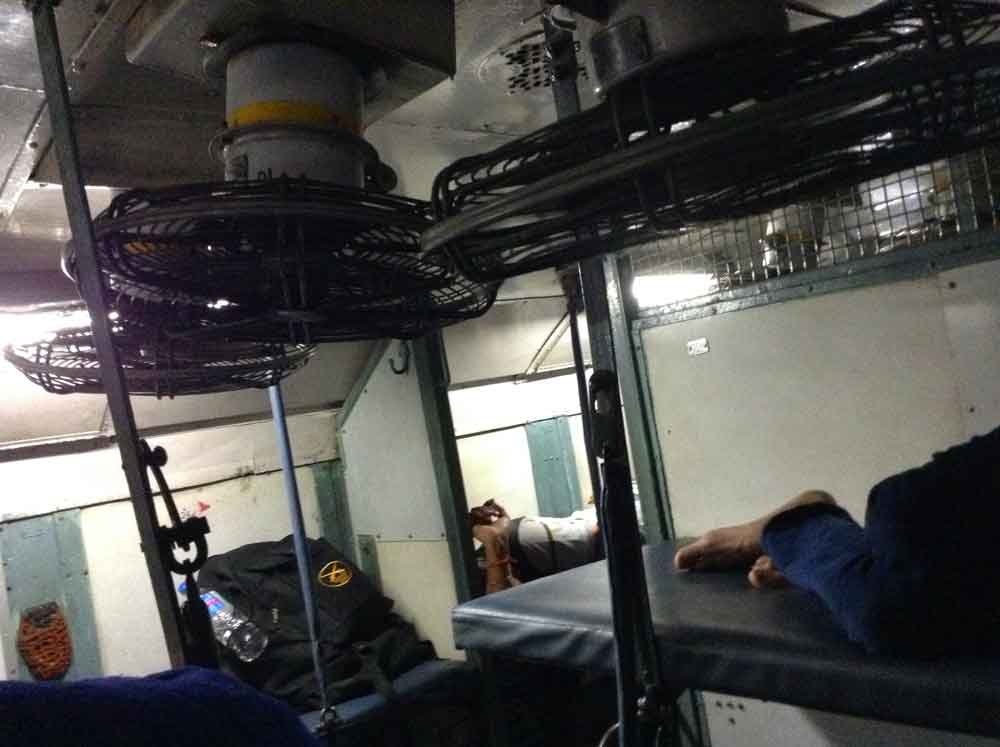
On Friday night, we met at the old Delhi Station. There were so many people, those carrying sacks and sacks of goods, clothes, appliances, gifts, luggage.
Groups of families sat in circles, awaiting their train, women in sarees, hair in buns. Lots of colors and dust.
People eating and chatting, cars honking, tuk tuks beeping.
Jyoti and I fought our way to the ticket booth and bought an overnight ticket to Gwalior. Then we took our backpacks toward the trails for our sleeper bunk.
Located 300 kilometers away from Delhi in the state of Madhya Pradesh, Gwalior is home to a number of historical sites and monuments. While it is rich in art and literature, the city remains relatively hidden when compared to metropolitans like Bombay and Delhi.
We arrived in a deserted Gwalior after 6 hours. Aside from a few tuk-tuks attempting to lure in our business, the streets were pretty much empty from any activity.
The next day, we explored.
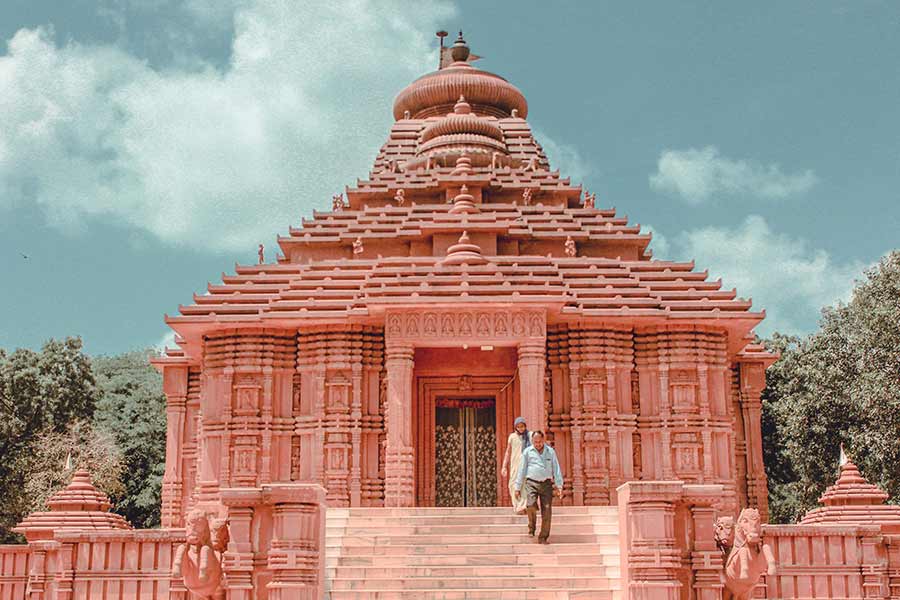
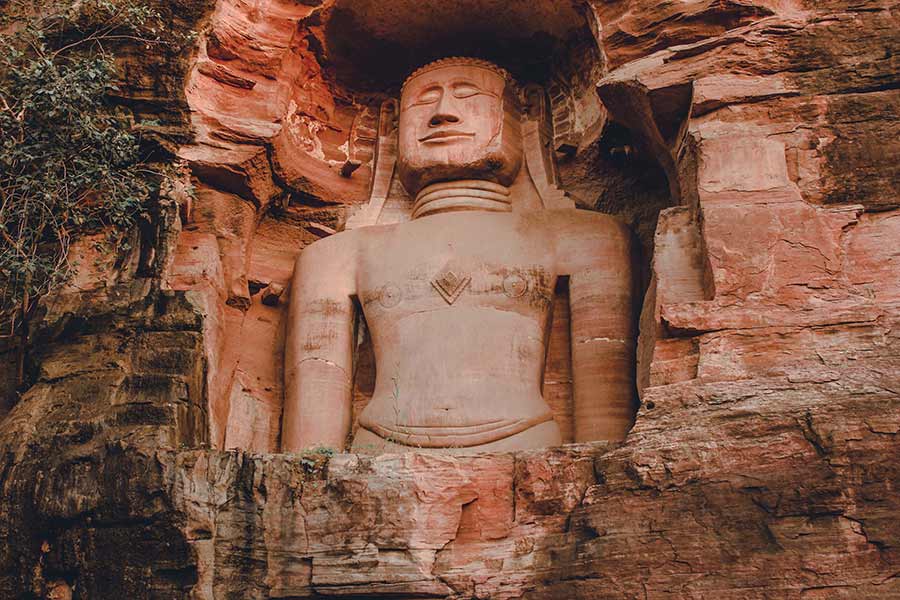
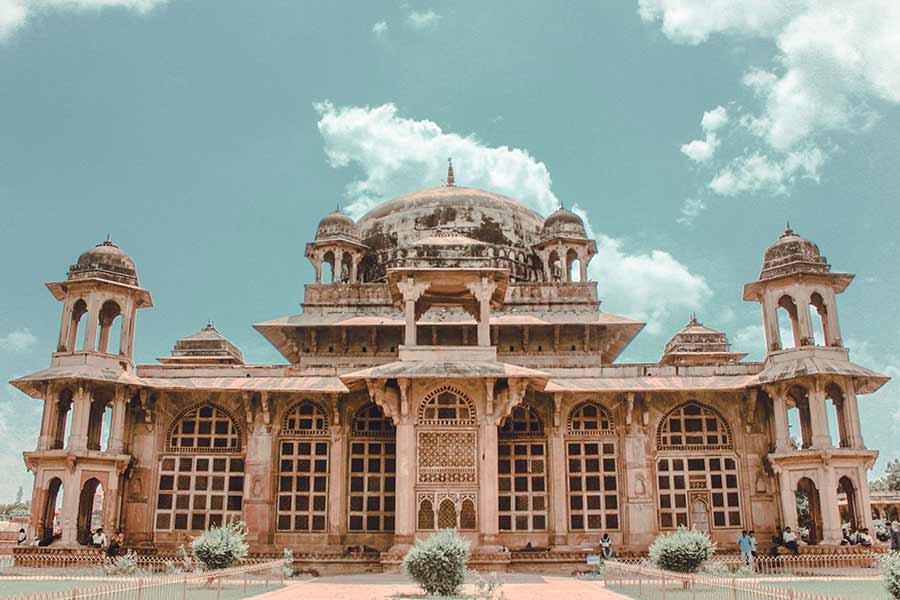
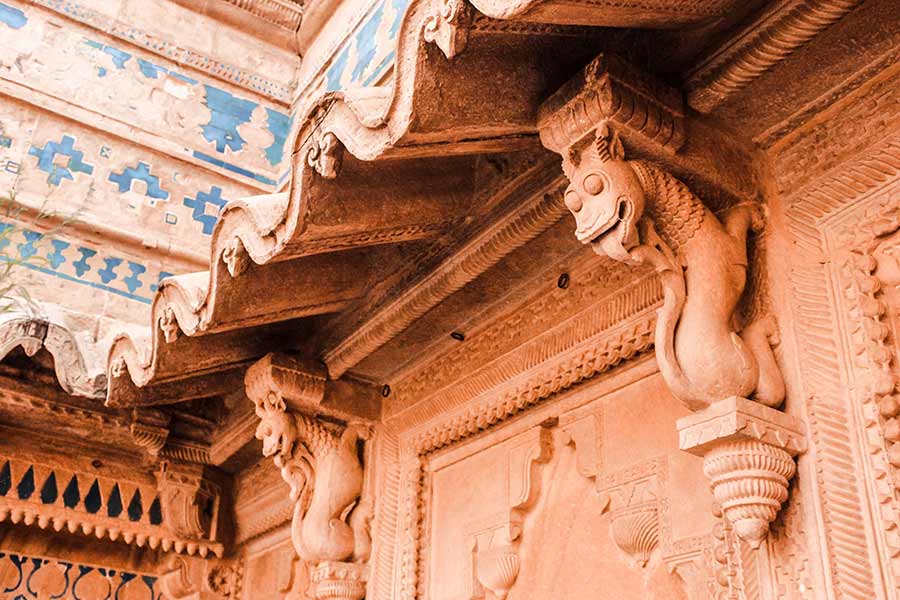

It is hard to capture the architectural details in words. Our first stop was the Sun Temple. With its magnificent red sandstone exterior and delicate carvings, the temple is dedicated to Surya, the Sun God. Inspired by the Sun Temple in Konark, Orissa, this one was commissioned in 1988 by G.D. Birla. Sitting proudly mid a beautiful green space, the temple is more than just a replica. It was a peaceful setting. The garden was free of chatter, as devotees navigate their way up the white marble steps with their bare feet.
After a 20 minute drive, we arrived at the Tomb of Mohammad Ghaus. Mohammad Ghaus was a 16-century Sufi master of Shattari order and the author of Jawahir-i Khams. The tomb itself was largely different from that of the other architectural designs in the area, which further indicates India’s steady embrace of multiculturalism and its colorful history.
Despite never having taken a seat of power, Ghaus Muhammed is widely respected by numerous Mughal rulers, who eradicated this towering tomb in memory of him.
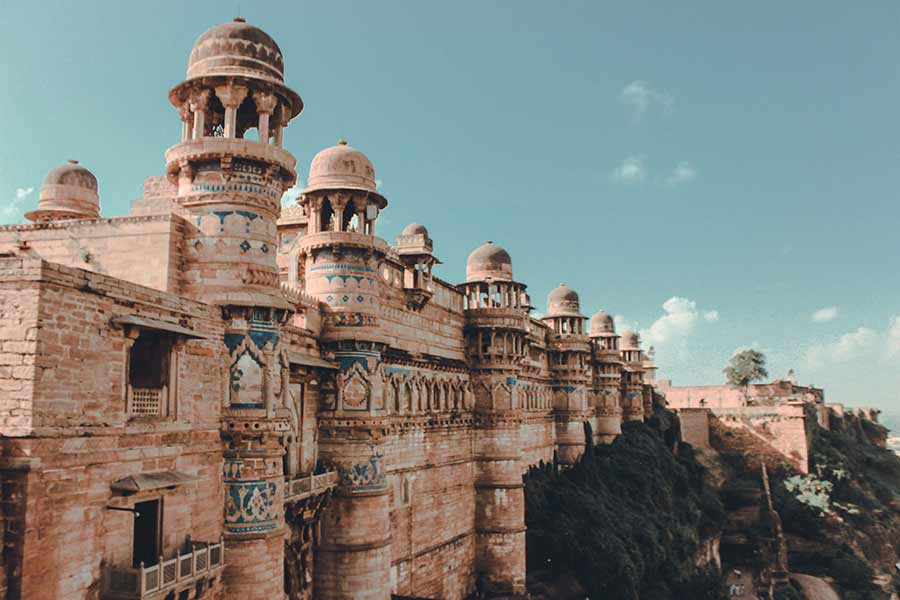
Then the Gwalior Fort, what a fort! Its hand-crafted designs were elaborate and rich in color. A detail signifying trade between China and India during the time of its construction, Chinese dragons were carved onto the pillars of the fort. After lunch, we headed over to the Gwalior Fort- Man Singh Palace. The Gwalior Fort was exceptionally beautiful. In fact, it was a photo of its picturesque walls that drew me to this relatively unknown city.
Just 5 minutes down the road, sits Sas-Bahu temple, two temples dedicated to Lord Vishnu and Lord Shiva, respectively.
For myself, these two temples truly embodied the core of Indian religion. Sahastrabahu Temple was constructed in 1092 by King Mahipala for his wife, a devotee of Lord Vishnu. However, when his son’s wife, a devotee of Lord Chiva arrived, another temple was eradicated meters away. Together, these two temples were known as ‘Sas-Bahu temple’, or, daughter-in-law and mother-in-law’s temple.
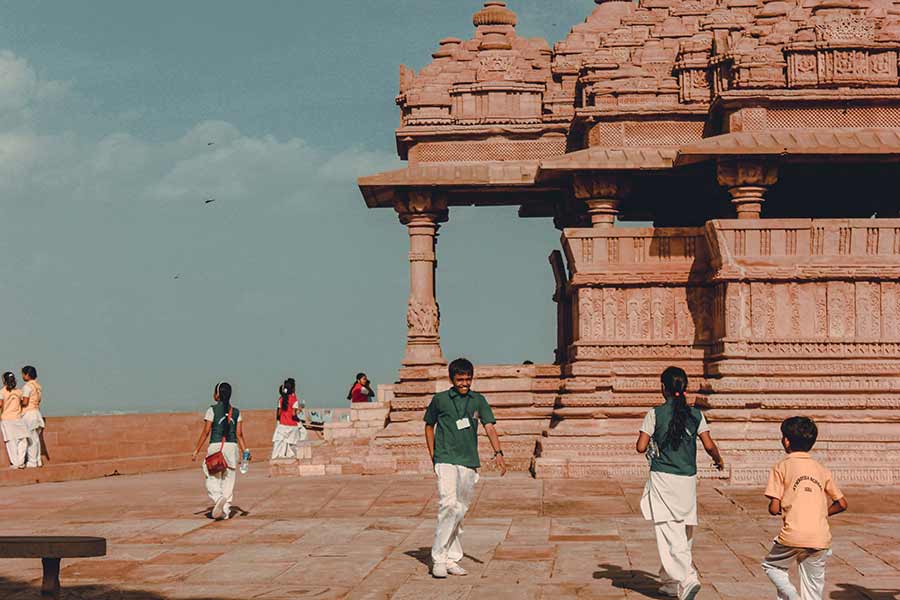
We walked around the compound and discovered that aside from a group of children, we were the only people in sight. After seeing me, many ran towards us and began pulling out their phones to take selfies. While my Asian features are a common sight in Delhi, where many Northeastern Indians reside, they quickly gained #celebritystatus amongst the children in Gwalior.
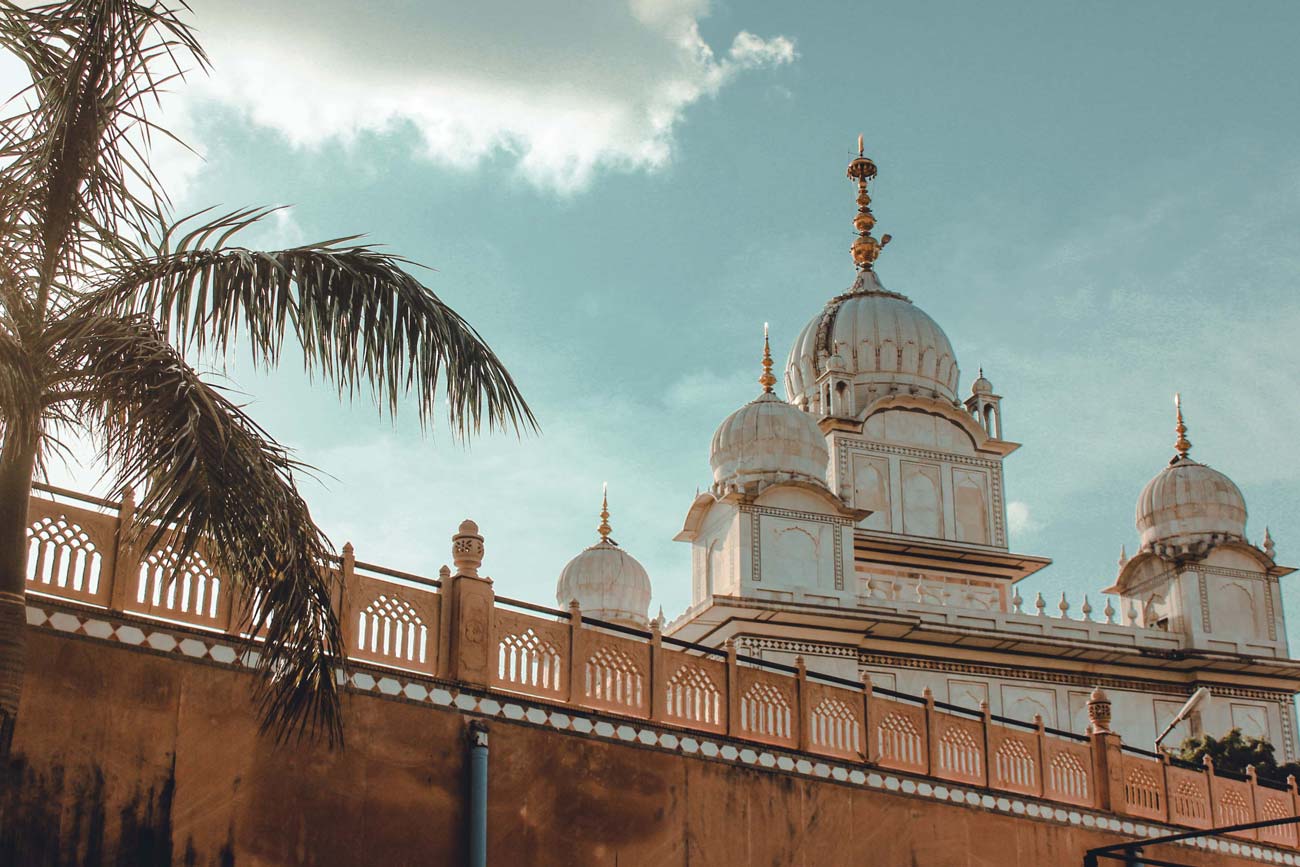
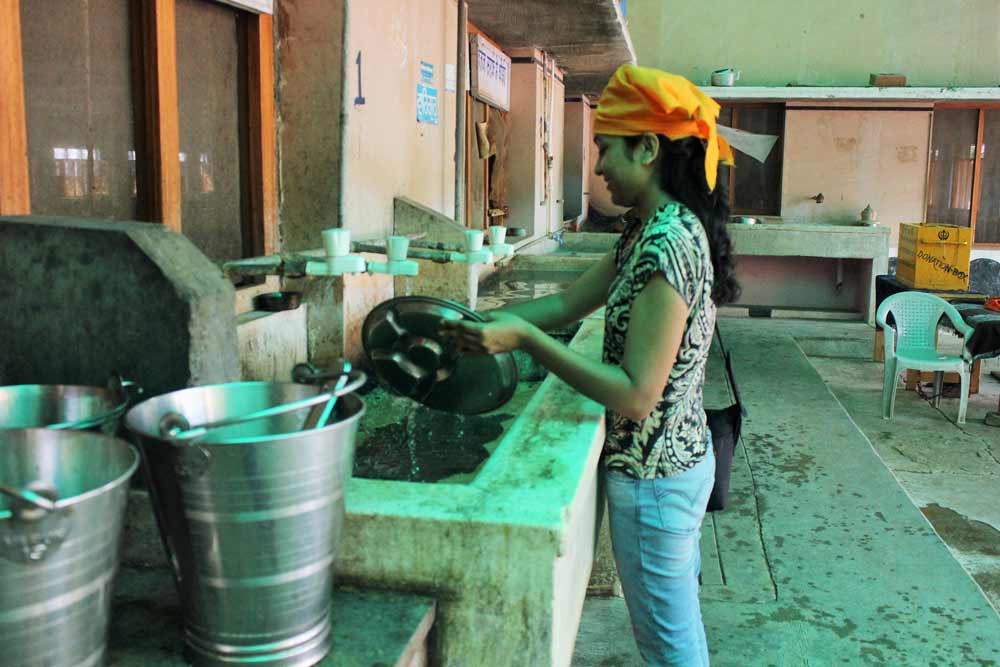
The highlight of our trip was staying at a Sikh Gurdwara. Gurdwaras are located around the world. They offer a place of worship, a langar hall, and rooms for temporary stays. In line with the practice of Sikhs, food, and stay are free of charge with donations welcomed. Most importantly, Gurdwaras opens its doors to people of all faith and religion.
Mr. Singh became our host during our stay at the gurdwara. He was such a generous man, showing us the temple space and the seamless preparation process for meals in the langar hall. When I caught a cold mid-Sunday, he came in with tea and biscuits wishing me well.
Jyoti told me she felt safe here.